

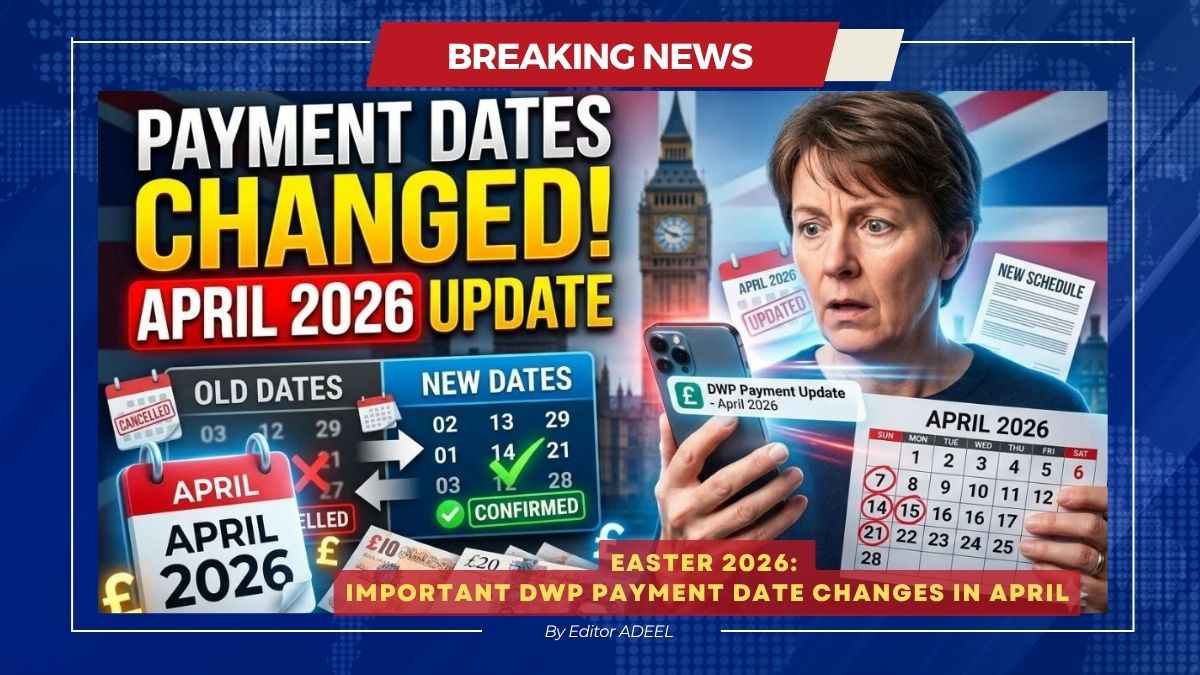
The Easter bank holiday period will mean that millions of benefit claimants throughout the UK will take an earlier payment than usual in April 2026. Easter Sunday falls on April 5, so some important holidays will have an effect on the regular payment scheduled to be issued by the Department for Work and Pensions (DWP).
Please include the Good Friday, April 3 and Easter Monday, April 6 holiday. As per the little development, any benefits that are to be paid on these bank holidays shall be paid earlier.
The claimants who anticipate receiving their payment on Friday 3, and one Monday, April 6, will get it on Thursday, April 2.
This change will bring many benefits, such as Universal Credit, State Pension Credit, Personal Independence Payment (PIP), Disability Living Allowance (DLA), Attendance Allowance and Carer’s Allowance.
The shift is in line with the normal practice in government, where the payments owed during bank holidays are given on the last working day preceding the holiday. This makes sure that there is no waiting for claimants as the banks and government offices are closed.
Financial analysts recommended that the receiver plan well because early payment does not imply additional money. Rather, the subsequent pay will be made in accordance with the normal cycle, and this may make the periods between payments extended. This is particularly significant to families that are on a high income on benefits to pay key expenses like house rent, food and utility bills.
Along with the change in the dates of payment, April 2026 will also be the beginning of new financial changes to benefit receivers. Universal credit payments will rise by approximately 6.2 which will present the slide improvement for families struggling with the current cost of living pressure.
Widespread changes in systems also exist. DWP is in the process of replacing legacy benefits with Universal Credit, and the vast majority of claimants will have transitioned by March 2026.
Claimants should verify their respective dates of payment using official letters or online accounts, as dates may differ under different circumstances. Payments are usually done in a standard cycle that is either monthly or every 4 weeks when they fall on weekends or holidays. In general, although the Easter bank holiday may lead to some short-term changes, the early payment system is to be used to safeguard the continuity and financial stability of the millions of people living in the UK. It is advisable that the payments remain updated and plan well within this time.
