

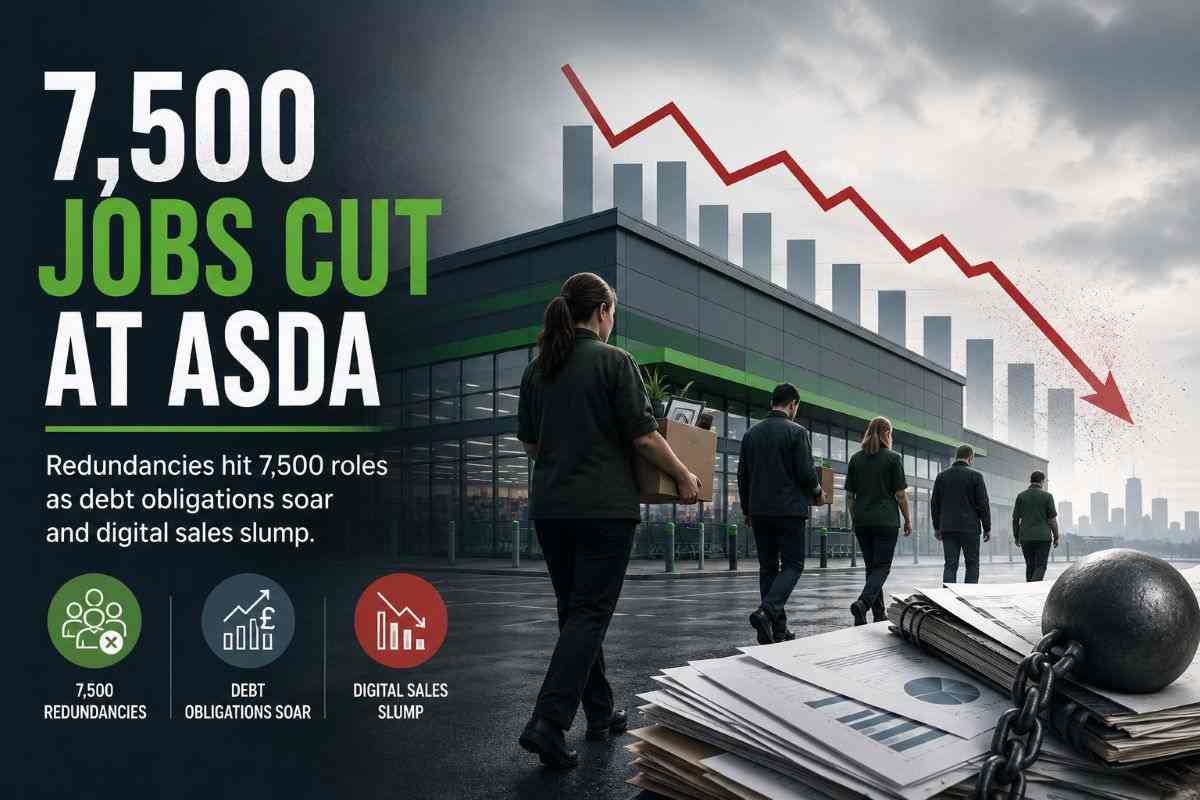
Asda is cutting 7,500 jobs across its operations as the supermarket chain grapples with a steep rise in interest payments on its debt and a notable downturn in digital revenue. The grocery major revealed that its annual debt service expenses have now exceeded £730 million, escalating financial pressures across the business. Concurrently, technical difficulties stemming from an extensive overhaul of its digital infrastructure have undermined its e-commerce performance.
The job reductions follow the publication of the supermarket’s latest full-year financial accounts, which highlight growing structural pressures. According to the company’s disclosures, the 8.1 per cent drop in online grocery sales recorded over the past year stems from significant functionality disruptions.
These issues arose during the final phases of “Project Future”, a complex, multi-year initiative designed to completely separate Asda’s internal information technology framework from that of its previous parent company, Walmart.
The financial fallout from these technical complications, combined with an aggressive strategy of price reductions aimed at competing with budget supermarkets, has contributed to overall annual losses expanding to nearly £1 billion. At the end of the previous fiscal year, the retail group reported a total net debt pile of £3.8 billion, a figure unchanged from the year prior.
To mitigate these liabilities, executives have recently engaged in capital-raising strategies, including sale-and-leaseback agreements for 24 store locations and a major logistics hub to unlock hundreds of millions of pounds in property value.
Industry analysts note that the dual burden of heavy financing requirements and declining e-commerce performance represents a severe challenge for the private equity-owned retailer. While the company continues to implement turnaround plans to stabilise its market share against expanding discounters, the operational disruption from its IT migration has directly impacted consumer access, leading some shoppers to migrate to competitors.
The supermarket chain has stated that it is reshaping responsibilities within its leadership team to address these operational and financial shortfalls. Despite these internal modifications, representatives for the retail workforce have expressed deep concern over the scale of the redundancy programme and the long-term impact on remaining shop floor and distribution staff, who continue to manage heightened operational stress.
