

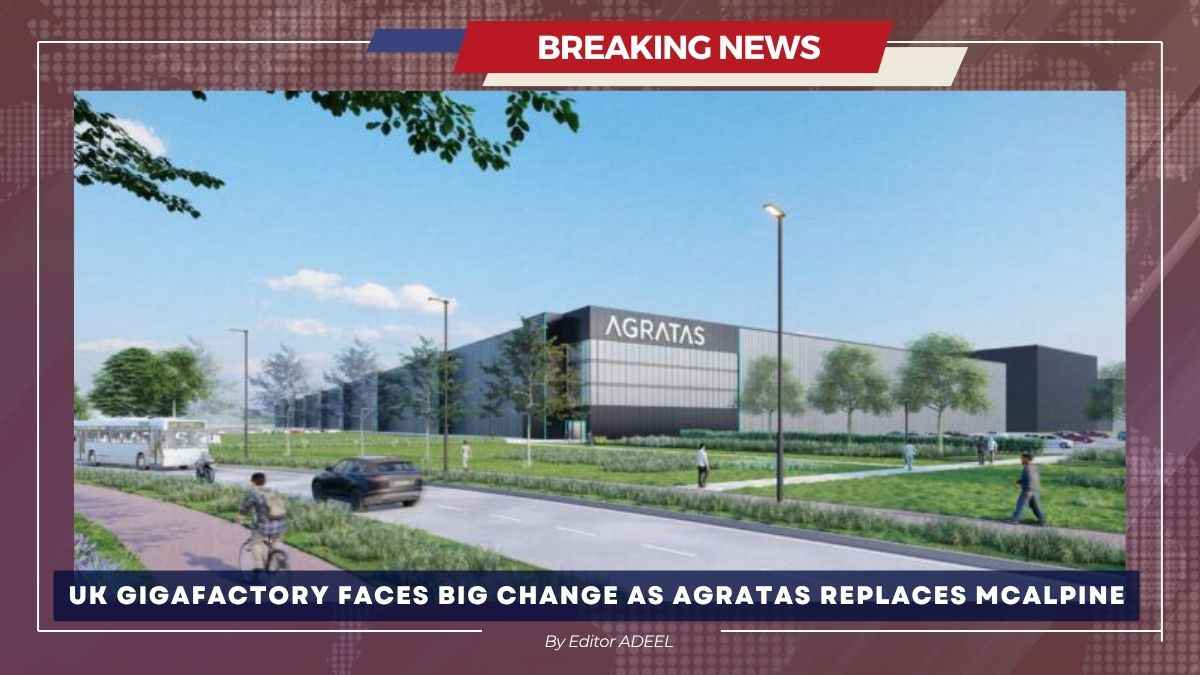
One of the UK’s largest industrial projects has entered a new phase after construction giant Sir Robert McAlpine confirmed it will step away from the £4 billion electric vehicle battery gigafactory being developed by Agratas in Somerset.
The decision marks a significant shift for the flagship battery manufacturing project at the Gravity Smart Campus near Bridgwater, which is expected to play a crucial role in strengthening Britain’s electric vehicle supply chain. Agratas, the global battery business owned by the Tata Group, has decided to adopt a different construction approach as the development moves into its next stage.
Sir Robert McAlpine, which was appointed in 2024 to lead the construction of the first phase of the facility, said it had successfully completed its initial responsibilities and had mutually agreed with Agratas to end its involvement after extensive discussions. The company stated that it would continue supporting a smooth transition to the new construction team.
Industry reports indicate that Buckinghamshire-based engineering and construction specialist TSL will take over the next stage of the project, although the transition comes amid previous delays and changes to the factory’s original development timetable. The first phase of the plant, initially expected to become operational in 2026, is now anticipated to be completed in 2027 following design adjustments and changes to the project’s manufacturing requirements.
The Somerset gigafactory remains a strategically important investment for the UK’s automotive future. Once fully operational, the site is expected to produce large-scale battery cells for electric vehicles, with Jaguar Land Rover among the major expected customers. The development is also projected to create thousands of jobs and support a broader domestic battery manufacturing ecosystem.
People close to the project have suggested that several factors contributed to the changes in delivery strategy, including revised building plans and challenges involving contractors during different stages of the development. Earlier disruptions included the departure of mechanical and electrical contractor TClarke, with other firms stepping in to continue essential work packages.
Despite the change in contractor, Agratas has emphasised that the project remains on course to achieve its long-term ambitions. The company said the new delivery model reflects the evolving needs of the development and is intended to ensure the next phase is completed safely, efficiently and according to its updated schedule.
The gigafactory continues to represent a major part of the UK’s efforts to establish a competitive domestic battery industry as demand for electric vehicles increases worldwide.
