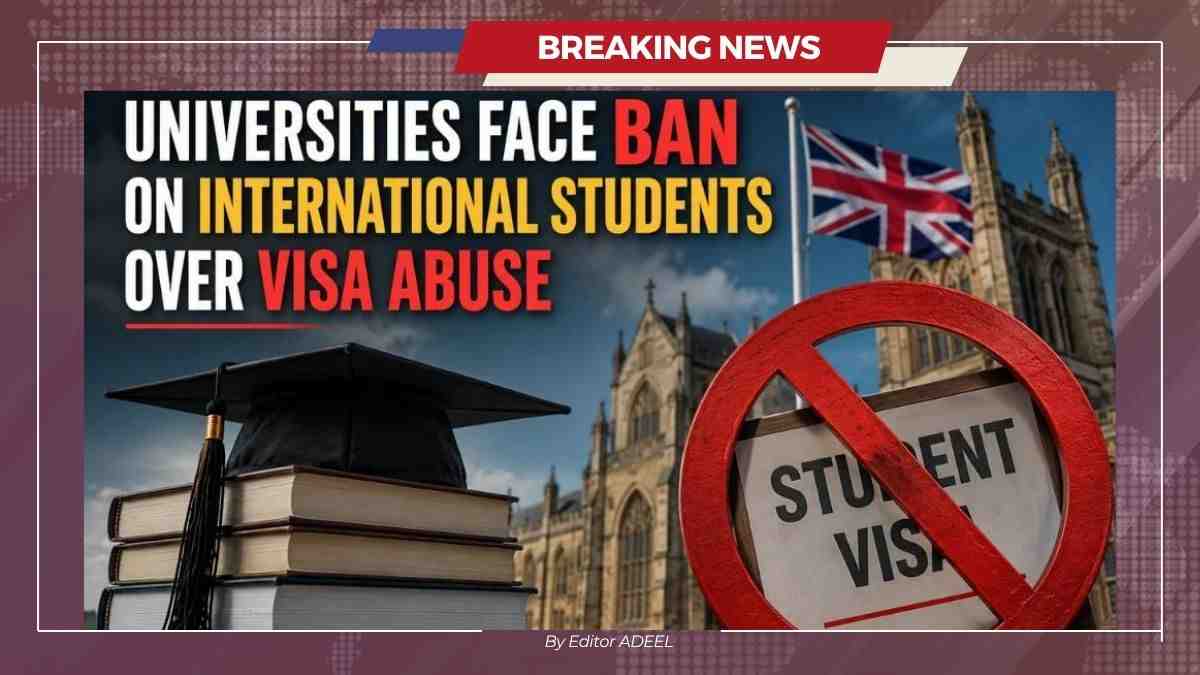

The UK government has announced stricter measures that could result in universities losing the ability to recruit international students if they are not found to comply with more stringent visa regulations if the abuse of the student visa system is to be addressed.
The reforms are as part of ministers’ efforts to cut down on the numbers of people using study visas to claim asylum or work illegally in Britain. New proposals by the Home Office will set tighter benchmarks for universities in terms of the number of students they enroll and the number who drop out of study and fail to receive a visa. Those institutions that do not comply with the standards might be subject to more rigorous scrutiny and in severe instances might lose their sponsorship licences, thus not being able to take on overseas students.
The acceptable visa refusal rate for sponsored students has been reduced from 10 per cent to 5 per cent and minimum enrolment and completion requirements have been raised.
The changes form part of a greater effort to restrict immigration and asylum applications in relation to legal visas. Home Office figures show thousands of people who were brought to the UK on study visas made an application for asylum after their visas expired. The number of asylum claims from students has dropped by about 30 per cent in the last year after a series of enforcement actions and checks on visas.
There is a new traffic-light style rating system that is supposed to analyze the level of compliance of universities. Poorly rated institutions might need to provide financing for improvement plans and improved management of international student recruitment and attendance. If progress isn’t made, then they might lose their overseas recruitment rights in the end.
After the announcement, there had been concern throughout higher education that tuition income will be severely affected by the drop in international enrollments. The UK’s reputation as one of the world’s top study destinations and the impact it could have on genuine applicants could be affected by the broad restrictions, warned university leaders.
The Russell Group, comprising 24 top UK universities, has said it wants a targeted approach rather than sweeping restrictions, targeting those committing fraud. The organisation has called on the government to cooperate with universities to detect high-risk students as well as safeguard genuine students and keep the UK higher education system attractive.
The measures come after the government earlier this year introduced a “visa brake” for the nationals of Afghanistan, Cameroon, Myanmar and Sudan which limits certain visa applications because of high asylum claim rates. However, the policy has been criticized by campaigners and students who say that it is unfairly involving genuine applicants in its efforts to reduce abuse.
Ministers say that the changes are intended to help safeguard the integrity of the immigration system, but universities are under increasing pressure to ensure that their international recruitment is matched with increasingly tight compliance standards.
According to the UK government’s website, universities will be banned from recruiting international students who have overstayed their visas. The change to the UK visa system, known as the visa brake, will be introduced in July.The UK visa brake, which will be implemented in July, is a change in the visa system.