

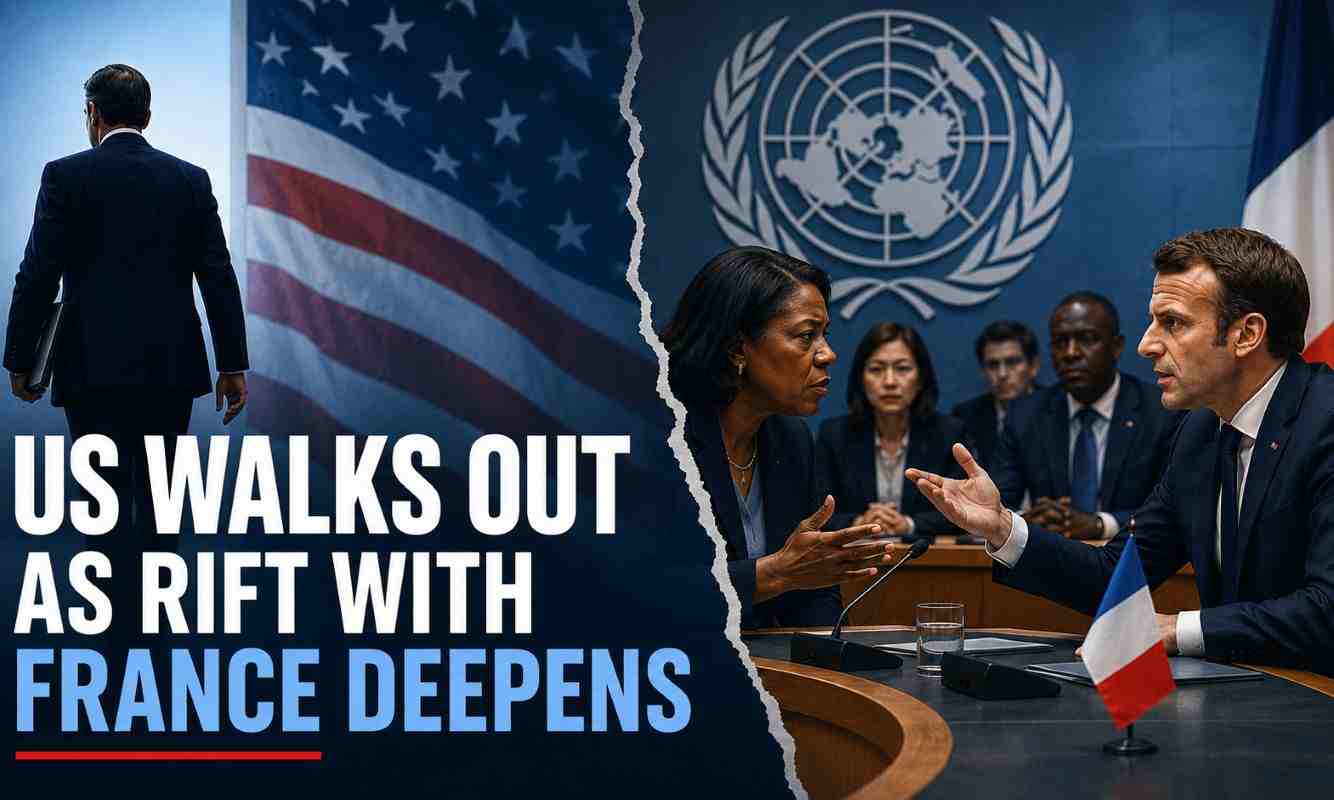
A rare diplomatic walkout at the United Nations has exposed growing tensions between two of the West’s closest allies. While the incident may appear to be another political disagreement, it reflects broader disputes over human rights, security, and the future of transatlantic cooperation that could have implications well beyond the UN chamber.
For UK readers, the episode is significant because Britain works closely with both the United States and France on NATO, Ukraine, and wider European security. Understanding what happened helps explain why relations between Western allies are under increasing strain.
What’s actually true?
The dispute unfolded during a United Nations Security Council meeting focused on Russia’s war in Ukraine. As France began addressing the Council, the US delegation walked out in protest, accusing Paris of unfairly criticising Washington’s human rights record. (AP News)
The immediate trigger was a separate disagreement over the reappointment of UN High Commissioner for Human Rights Volker Türk. The United States opposed extending his term, while France strongly backed it. After France publicly criticised Washington’s position, comparing the US vote with those cast by several authoritarian governments, relations quickly deteriorated. (Reuters)
US officials described France’s comments as “disingenuous grandstanding” and said the walkout was intended as a protest against what they considered disrespectful rhetoric. French diplomats, meanwhile, defended their position and reiterated support for the UN’s role in promoting international law and human rights. (Reuters)
Although dramatic, the walkout did not halt Security Council business or indicate that either country is withdrawing from the United Nations.
How this connects to NATO and European security
The diplomatic clash is about more than one UN vote.
It highlights wider disagreements between Washington and several European governments over defence spending, NATO’s future, the war in Ukraine, and the role of international institutions. Analysts also point to ongoing differences between President Donald Trump and French President Emmanuel Macron on European security and global diplomacy. (AP News)
For the UK, these relationships matter because Britain remains one of NATO’s leading military powers and works closely with both countries on defence, intelligence sharing, sanctions, and support for Ukraine.
Most experts do not believe the disagreement signals the collapse of the Western alliance. Instead, it demonstrates that allies can publicly disagree while continuing to cooperate on major security issues.
Common misconceptions
One misconception is that the US “storming out” means diplomatic relations with France have broken down completely.
That is not the case. Countries frequently continue working together despite sharp disagreements at international meetings.
Another misunderstanding is that the dispute centred on Ukraine itself. While the Security Council meeting focused on the conflict, the immediate cause of the walkout was the escalating argument over human rights and the leadership of the UN human rights office. (Reuters)
It’s also worth remembering that heated exchanges at the UN are not unusual. Public statements often reflect political messaging aimed at domestic audiences as well as international diplomacy.
What to do next
If you’re following international affairs, it’s worth watching how this dispute develops over the coming weeks.
Pay particular attention to:
- Future NATO meetings involving the US, France and the UK.
- Any joint statements on Ukraine or European security.
- Official announcements from the United Nations rather than relying solely on social media commentary.
- Coverage from established international news organisations, as diplomatic situations can change rapidly.
For businesses, investors and travellers, there is currently no indication that this diplomatic dispute will lead to immediate practical changes affecting everyday activities.
Key takeaways
The US walkout from the UN marked one of the sharpest public disagreements with France in recent months, but it does not mean the alliance between the two countries has ended. The incident reflects broader tensions over human rights, international institutions and European security rather than a single disagreement.
For the UK, the story is worth watching because cooperation between the United States, France and Britain remains central to NATO and the international response to global conflicts. While political rhetoric has intensified, the underlying partnerships on defence and security continue.
