

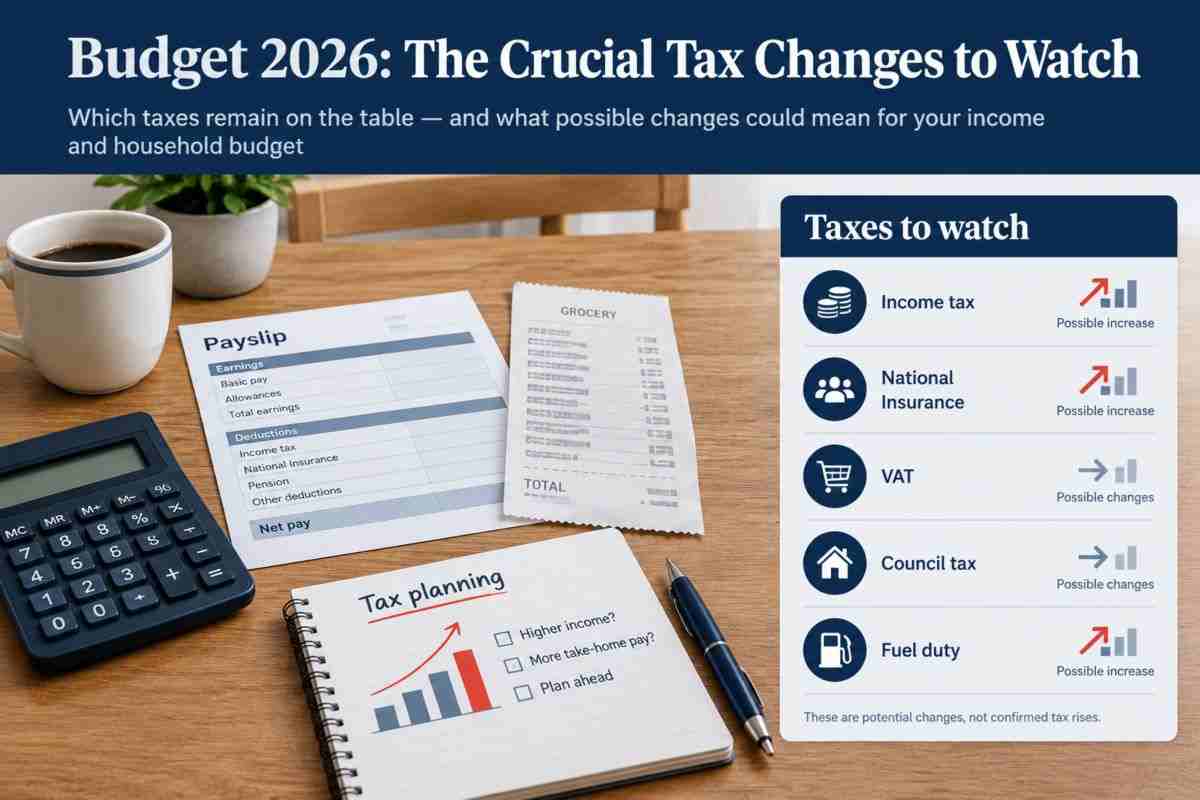
The next UK Budget could bring fresh tax changes for households, property owners, investors and businesses, as Chancellor John Healey faces mounting pressure to keep the public finances under control. Several measures are being discussed ahead of the announcement, but there is an important distinction between taxes ministers have left open for consideration and changes the government has actually agreed to introduce.
For taxpayers, the big question is which proposals could affect their money — and whether there is anything worth doing before the Budget.
What’s actually true about Budget 2026?
The government is preparing its Budget against a difficult economic backdrop, with higher borrowing costs and rising energy prices adding pressure to the public finances. Healey has acknowledged the challenge but has not confirmed a package of new tax increases.
Reuters reported on 7 October that the Chancellor was considering several options to restore the government’s financial flexibility. These included changes affecting expensive properties, banks and capital gains. The Budget is scheduled for 28 October, according to current reporting.
Here are the main areas attracting attention.
- Capital gains tax: This tax applies to profits made when certain assets are sold. One proposal under discussion is aligning capital gains tax rates more closely with income tax rates. If adopted, this could affect some investors, landlords selling properties and people disposing of other taxable assets. However, no such change should be treated as confirmed.
- Mansion tax: A higher-value property levy is another possibility. Reports have discussed lowering the threshold at which expensive homes become liable, potentially bringing more properties into scope. Homeowners should wait for details on valuation, eligibility and any exemptions before estimating their exposure.
- Banks and financial companies: A possible additional levy on banks has also been discussed. Supporters could argue that profitable financial institutions should contribute more to public finances, while banks warn that higher taxes might affect investment, lending and the UK’s competitiveness.
- Fuel duty: The government must also decide what to do about the temporary reduction in fuel duty. Any decision to extend, change or end the relief could affect motorists, although the impact on pump prices would also depend on oil prices and retailers’ costs.
These remain possible policy options, not a definitive list of taxes that will rise.
How could the Budget affect your household finances?
The consequences depend on your circumstances.
For employees, the main concern is whether income tax thresholds, allowances or other personal tax rules change. Property owners may need to pay attention to proposals affecting higher-value homes, while investors should monitor any changes to the tax treatment of profits.
Small businesses and employers will be watching for measures that could affect operating costs, investment decisions and consumer demand.
There is also a wider economic consideration. If the government raises taxes to strengthen its finances, that could help reassure financial markets. But poorly designed changes could discourage investment or leave some households with less money to spend.
The final effect will depend on the measures chosen, their start dates and any transitional arrangements.
Three Budget misconceptions worth avoiding
1. A tax that has not been ruled out is not a tax increase. Ministers often avoid making commitments before a Budget because policy decisions remain under consideration. Silence does not establish that a proposal will become law.
2. A headline tax rate does not tell the whole story. Allowances, exemptions, thresholds and the definition of taxable income or assets can substantially affect the amount payable.
3. You do not need to make rushed financial decisions. Selling investments or property, changing pension arrangements or bringing forward transactions solely because of speculation can create costs of their own. Existing tax rules and the eventual Budget details should guide any decision.
What should you do before the Budget?
There are several sensible steps you can take without assuming the worst.
- Review your finances: Understand your income, savings, investments and property exposure so you can assess any confirmed changes.
- Check official announcements: Read the Budget documents and the relevant HMRC guidance once the measures are published.
- Speak to a qualified adviser if necessary: Investors, landlords and owners of high-value properties may benefit from individual advice if a proposed change could materially affect them.
- Avoid acting on rumours: Wait for the actual rules, including implementation dates and transitional provisions, before making costly decisions.
The government’s Budget documents and HMRC’s published guidance will provide the clearest basis for working out what changes mean for you.
The bottom line
Budget 2026 could bring changes affecting capital gains, expensive properties, banks and motorists, but speculation should not be confused with confirmed policy. The practical priority is to identify which proposals could affect your own finances and wait for the Chancellor’s final decisions before making major changes.
