

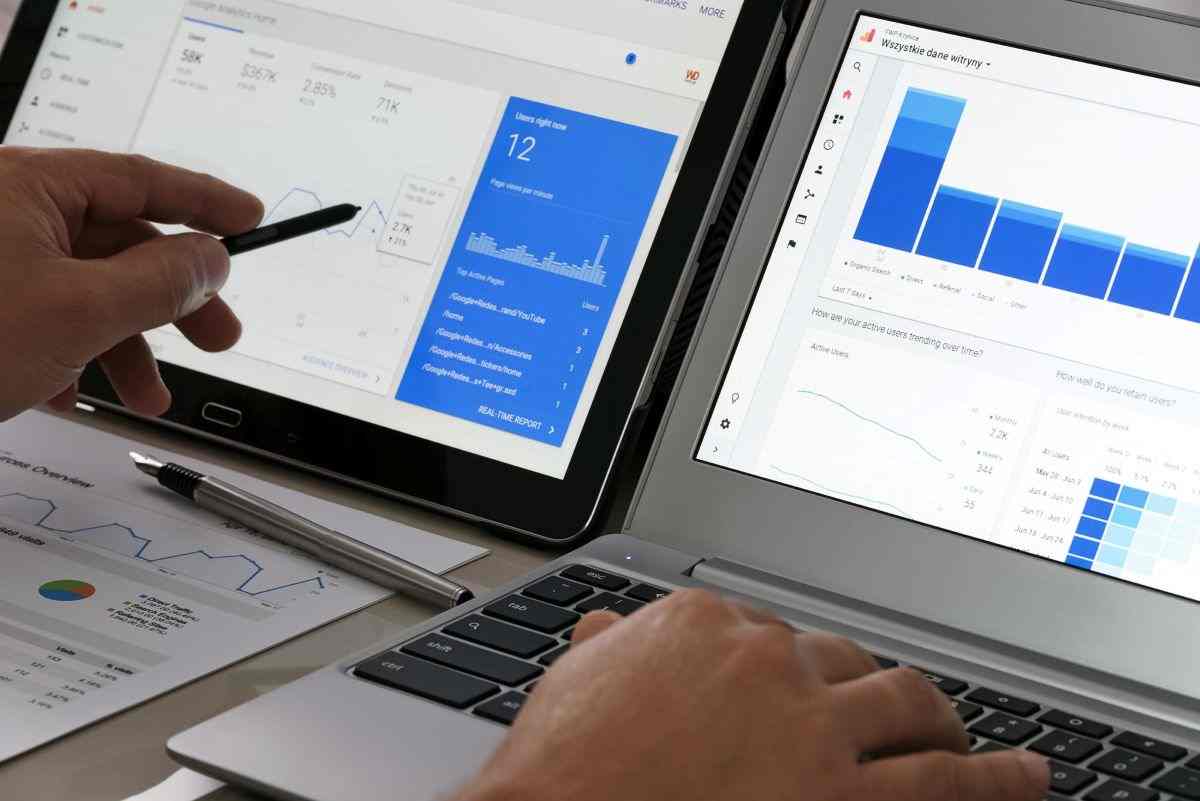
Most website owners install Google Analytics, glance at visitor numbers occasionally, and leave the vast majority of actionable insights buried in data they never examine. This represents an extraordinary missed opportunity because your website generates a constant stream of behavioural signals that reveal exactly what’s working, what’s failing, and where simple changes could deliver dramatic improvements. The difference between businesses that extract real value from analytics and those that track vanity metrics often determines competitive outcomes in digital markets where marginal improvements compound over time.
Google Analytics contains answers to the most important questions about your digital presence: which marketing channels actually drive conversions rather than just traffic; where visitors abandon your conversion funnels; what content keeps people engaged versus what drives them away; and which audience segments deliver the highest value. Unlocking these insights doesn’t require advanced technical skills or data science expertise, just knowing where to look and how to interpret what you find.
Win One: Identify Your Highest-Value Traffic Sources
Not all website traffic delivers equal value. Visitors from different sources arrive with different intents, engage with your content differently, and convert at dramatically different rates. Understanding which traffic sources drive actual business outcomes rather than just visitor numbers allows you to reallocate marketing spend toward channels that work whilst cutting those that waste budget.
Navigate to Acquisition > All Traffic > Source/Medium in Google Analytics to see how different channels perform. Look beyond sessions and users to examine goal completions, conversion rates, and, if you’ve enabled e-commerce tracking, actual revenue by source. You’ll often discover surprising patterns: perhaps organic social media drives substantial traffic but almost no conversions, whilst a modest email list generates disproportionate revenue. Or that paid search converts well, but certain campaigns or keywords deliver far better ROI than others.
The actionable insight comes from comparing channel performance and asking: what would happen if you redirected budget from low-performing channels to high-performing ones? If email marketing generates three times the conversion rate of social media at a fraction of the cost, shouldn’t you invest more heavily in list growth? If certain paid search keywords convert at 8% whilst others convert at 0.5%, shouldn’t the budget flow toward proven performers?
Many businesses discover that their assumed best marketing channels actually underperform dramatically when analysed properly. The blog content consuming hours weekly might drive traffic that bounces immediately, whilst the neglected LinkedIn presence generates small visitor numbers but extremely high-quality leads. Data-driven channel allocation based on actual performance rather than assumptions typically improves marketing ROI by 30 to 50% without increasing total spend.
Win Two: Fix Your Conversion Funnel Leaks
Every website has conversion funnels that guide visitors from initial landing to desired actions like purchases, sign-ups, or contact form submissions. These funnels leak visitors at every step, but identifying where the biggest leaks occur tells you exactly where optimisation efforts will deliver maximum return.
Set up funnel visualisation in Google Analytics by defining the steps in your conversion process. For e-commerce sites, these might include product page views, add-to-cart, checkout initiation, payment information entry, and purchase completion. For lead generation, perhaps: landing page, service page, contact page, form submission. The visualisation shows exactly what percentage of visitors complete each step and where they exit.
The power comes from identifying disproportionate drop-off. If 60% of visitors adding items to cart abandon during checkout, that’s your priority optimisation target. Perhaps your shipping costs surprise people at checkout, your payment options are limited, or the checkout process is confusing. If 80% of visitors reaching your contact page never submit the form, maybe the form asks too many questions, lacks trust signals, or has technical issues.
Focus optimisation efforts where data shows the biggest opportunities. Improving a step where 10% of visitors drop off yields minimal impact. Improving a step where 70% abandon can double your conversion rate overnight. This targeted approach delivers far better results than random optimisation or focusing on steps that feel important but don’t actually reduce visitor loss.
Win Three: Understand Which Content Actually Engages
Content marketing consumes substantial time and budget, but most organisations lack clear visibility into which content actually engages audiences versus what gets ignored. Google Analytics provides several metrics revealing content performance beyond simple page views.
Examine average time on page, scroll depth if you’ve set up custom events, and bounce rate to identify content that holds attention versus content that drives immediate exits. A long time on the page with low bounce rates indicates genuinely engaging content. High page views, 90% bounce rates, and a 15-second average time on site suggest the content attracts clicks but disappoints readers.
Use Behaviour > Site Content > All Pages and add secondary dimensions like traffic source to understand not just which content performs well, but for which audiences. A blog post might perform brilliantly for organic search traffic but poorly for social referrals, suggesting you’ve optimised well for search intent, but the content doesn’t resonate with social audiences.
The actionable win involves doubling down on content formats and topics that data proves engage your specific audience, whilst cutting or reimagining content that consistently underperforms. If your detailed how-to guides retain visitors for five minutes whilst your industry news posts get 30-second visits before exits, produce more guides and fewer news items. If video content shows 3x the engagement of text, shift toward more video production.
Win Four: Segment Users to Personalise Experiences
Your website serves diverse audiences with different needs, but most sites present identical experiences regardless of who’s visiting. Google Analytics’ segmentation capabilities reveal how different user groups behave, allowing you to create targeted experiences that convert each segment more effectively.
Build segments based on behaviours, demographics, technology, or traffic sources. Compare new versus returning visitors: are first-time visitors abandoning quickly because your homepage doesn’t adequately explain what you offer, whilst returning visitors convert well? Segment by device: Do mobile users struggle with specific pages that desktop users navigate easily? Segment by location: Do international visitors abandon your checkout when they realise you don’t ship to their country?
For more sophisticated analysis, create custom segments combining multiple criteria. Perhaps visitors arriving from paid search on mobile devices who view three or more pages convert at exceptional rates, whilst visitors from social media on desktop who view only one page never convert. These insights drive targeted optimisation: improve the single-page experience for social/desktop visitors or create specific landing pages for your high-converting paid search mobile traffic.
The win comes from moving beyond treating all visitors identically toward personalised experiences matching different segment needs. Technical personalisation requires development resources, but you can often achieve significant improvements through simpler approaches, such as creating dedicated landing pages for different traffic sources or serving different content paths to mobile versus desktop users.
Win Five: Leverage Real-Time Data for Immediate Optimisation
Most analytics analysis focuses on historical data, but Google Analytics’ real-time reporting enables immediate optimisation during active campaigns or time-sensitive initiatives. Real-time data shows what’s happening on your site right now: which pages visitors are viewing, where they’re located, which traffic sources they’re arriving from, and which actions they’re taking.
This proves invaluable for campaign validation. Launch a new paid advertising campaign and immediately see whether traffic arrives at the intended landing page, whether visitors engage with content as expected, and whether early conversions materialise. If you’re spending £500 daily on ads driving visitors who immediately bounce, you want to know within hours rather than discovering the problem a week later after wasting £3,500.
Real-time data also enables rapid iteration. Running a promotion or product launch? Monitor real-time traffic and conversion patterns to identify issues immediately. Perhaps your email blast generates massive traffic, but visitors can’t find the promoted product, or your checkout process fails under load. Real-time visibility allows corrective action whilst campaigns are active, rather than post-mortems explaining why initiatives failed.
For businesses running time-sensitive offers, seasonal campaigns, or event-driven marketing, real-time analytics transforms from interesting curiosity to a business-critical tool enabling agile optimisation.
Getting Help When You Need It
Whilst Google Analytics provides powerful capabilities, extracting maximum value often requires expertise beyond what busy marketing teams can develop internally. Google Analytics consulting services help businesses implement proper tracking, design meaningful measurement frameworks, identify opportunities buried in data, and train teams to use analytics effectively for ongoing optimisation.
The return on investment from proper analytics implementation and analysis typically exceeds almost any other marketing spend because it improves the effectiveness of all other marketing activities. You’re essentially getting more value from existing traffic and campaigns rather than spending more to acquire additional traffic that you’d also waste through poor optimisation.
These five wins represent just a fraction of the insights available through systematic analytics analysis. Start with these, demonstrate value through measurable improvements, and build momentum toward more sophisticated data-driven optimisation. Your website data contains the answers to your most pressing digital marketing questions. The only question is whether you’ll take the time to find them.
